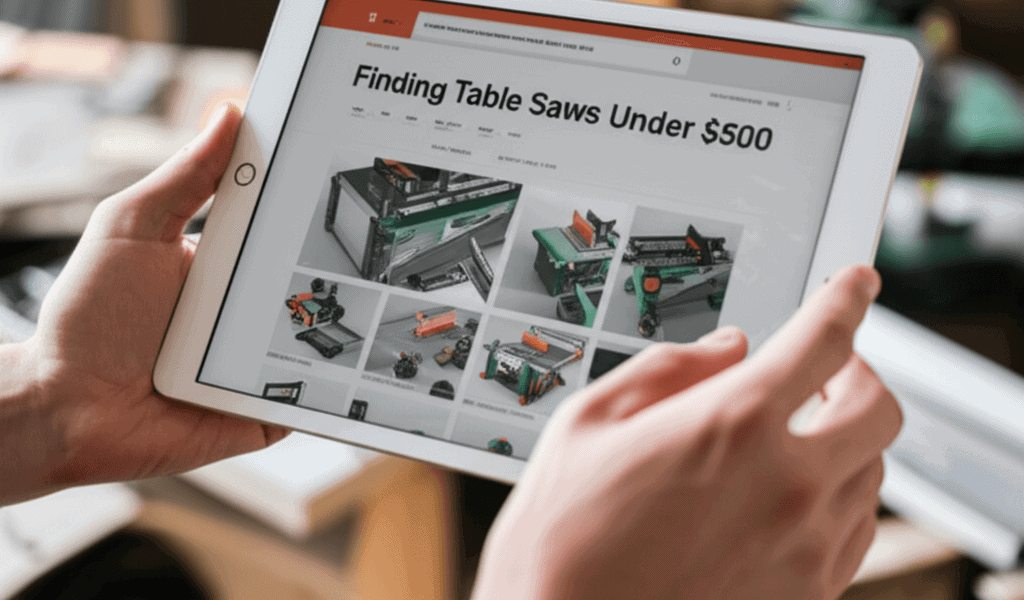
Finding Table Saws Under $500
Finding a table saw under five hundred dollars feels like solving a tricky puzzle. It needs enough power to slice through hardwood and keep the blade sharp for spot-on joints, all while sticking to a budget. A good saw lifts woodworking skills without draining cash. Picking one that mixes strength with accuracy cuts down on hassle and wasted hours. These tips show how to make smarter, steadier cuts every time. Keep reading to discover secrets that will turn every project into a success.
I will walk through key features to look for practical trade offs and real world tips that help you get the most value. Whether you build furniture or tackle weekend projects this information will help you spot which models deliver the best performance for the price.
How to set realistic expectations when shopping on a budget
When targeting table saws below five hundred dollars accept that some high end features will be missing. Cast iron tops powerful professional motors and industrial grade fences are usually found on pricier machines. That said many budget models offer clean cuts repeatable rip capacity and sturdy construction that suits hobbyists and small projects.
Key expectations to keep in mind include blade quality blade stability and fence accuracy. Look for models with a minimum one year warranty clear user reviews and parts availability. A good motor and stable fence will matter more than flashy extras when you need consistent results.
Essential features to prioritize for durability and cut quality
Focus on components that have the greatest impact on performance. Here are the main areas to evaluate when comparing machines in this price range
- Motor look for at least 1.5 to 2 horsepower equivalent in 15 amp units for cutting thicker stock
- Table flatness a flat tabletop cuts truer. Steel or cast aluminum tops tend to stay flatter than stamped sheet metal
- Fence system a fence that locks securely with low play improves repeatable rip cuts
- Blade and arbor a 10 inch blade is standard and accepts a variety of blades for ripping crosscutting and dado work
- Miter gauge most stock gauges are basic. Expect to upgrade if you need high accuracy crosscuts
- Safety features look for a reliable blade guard riving knife and a safety switch that stops power quickly
Power and cutting capacity explained simply
For most home shops a 15 amp motor that produces between 1.5 and 2 horsepower at the blade is sufficient. This power level lets you cut hardwoods at reasonable feed rates without bogging down. If your work involves thick hardwood or heavy duty resawing you may need to make slower passes and take shallower cuts.
Blade size and depth of cut
A standard 10 inch blade gives a maximum depth of cut around 3 1/8 inches at 90 degrees. That is enough for most shelving and furniture parts. If you need deeper cuts you may consider stacked blade techniques or multiple passes instead of a single deep cut.
Rip capacity and table size
Rip capacity tells you how wide a board you can cut from the blade to the fence. Many budget saws offer a rip capacity between 20 and 30 inches which is fine for ripping sheet goods and common lumber widths. If you plan to rip full sheets you will need a separate table or track system to support the panel.
Fence accuracy and what to test in the store or on delivery
A fence that shifts or has play will ruin repeatability. When you inspect a saw check how the fence locks and feel for any side to side wobble. A T square style fence usually offers better alignment than a pin style arrangement.
- Test with a straight edge placed against the blade and fence to check alignment
- Lock the fence and push a long straight board through to detect deflection
- Measure a rip cut and then flip the board and rip again to compare widths
If you receive a saw with a fence that needs adjustment many models allow minor alignment fixes with set screws and calibration. However excessive play may require replacing the fence or adding aftermarket parts.
Safety features and user friendly controls
Safety should not be an afterthought even at this price point. Look for a riving knife or splitter that rises and falls with the blade. A clear blade guard helps with visibility while still protecting your hands. A large paddle style on off switch makes it easy to cut power quickly.
Anti kickback options and push tools
Kickback is the most common cause of table saw injuries. Anti kickback pawls attached to the riving knife help catch the board if it grabs the blade. Always use push sticks or push blocks when working close to the blade. Some budget saws include push tools in the box which is a helpful addition.
Portability versus shop permanence and which fits your workflow
Decide whether you need a portable saw for job site travel or a small cabinet that stays in a shop. Portable models are lighter have folding stands and often include onboard storage for accessories. They are ideal if you move between job sites or work in tight spaces.
Stationary bench top models sit on a workbench and can be more solid but require a dedicated surface. Both types can deliver accurate cuts. Choose based on the space you have and how you transport the tool.
Upgrades and accessories that extend value over time
Stretching your budget further is possible by prioritizing a few upgrades. A high quality blade often makes the biggest immediate difference. For example a thin kerf ripping blade reduces waste and requires less motor torque. A better miter gauge or crosscut sled adds accuracy for joinery and picture frame work.
- Replace the stock blade with a fuller tooth count combination blade for cleaner cuts
- Add a crosscut sled for square repeatable crosscuts
- Install an outfeed roller or support for cutting long material
- Consider an aftermarket fence if the stock fence is loose or hard to set
These upgrades are often less expensive than buying a higher priced saw and can significantly improve performance.
Where to research models and read real user feedback
Start with product pages specifications and then move to user reviews and forum threads for real life experiences. Product listings show spec numbers but user reports reveal how a saw performs under load and how durable it is over time. If you want a curated list to compare options quickly check a trusted review page such as best table saws under $500 which highlights practical choices in this price bracket and explains trade offs between models.
When reading reviews look for patterns related to setup time noise levels motor strain and support from the maker. One or two negative reviews are normal but repeated reports about the same fault indicate a potential design issue.
Practical buying tips and a basic checklist before checkout
Follow this quick checklist to avoid common mistakes
- Confirm the blade size and whether arbor bolts are standard for aftermarket blades
- Measure the rip capacity to match the materials you usually cut
- Check shipping packaging and return policy for bulky items
- Inspect warranty coverage and availability of replacement parts
- Plan for upgrades you want to add so you can budget accordingly
If possible assemble and run the saw at home on scrap material before tackling a project. That lets you spot setup problems and adjust the fence or miter gauge without risking a valuable board.
Choosing a table saw under five hundred dollars comes down to making informed trade offs. Prioritize a stable fence a reliable motor and a flat table surface. Protect yourself with safe practices and add a few targeted upgrades like a quality blade or crosscut sled to boost performance. Use user reviews and product comparisons to confirm long term reliability and warranty support.
Now that you have a clear checklist and a sense of which features matter most you are ready to compare models confidently. Take your time to inspect fence action and table flatness and do not overlook basic safety items. If you need recommendations start with a short list of models that match your rip capacity and portability needs then narrow by user feedback and parts availability. Ready to pick the best option for your shop Make a short pros and cons list for two or three candidates and choose the one that balances build quality and price. Happy building and stay safe when you cut.